
Root canal treatment in Stoke-on-Trent
Root canal treatment has a reputation for being something to dread. In reality, it's one of the most effective ways to save a tooth that would otherwise need to come out - and in experienced hands, it's far more straightforward than most people expect.


Saving your natural tooth is always worth it
Losing a tooth creates a knock-on effect. The surrounding teeth can start to shift, your bite changes, and over time it can affect the bone structure in your jaw. Replacing a lost tooth - whether with a dental implant a bridge, or dentures - is also considerably more involved than treating the problem before it gets to that point.
Root canal treatment exists to save your natural tooth. And your natural tooth is always the best tooth to keep.
What is root canal treatment?
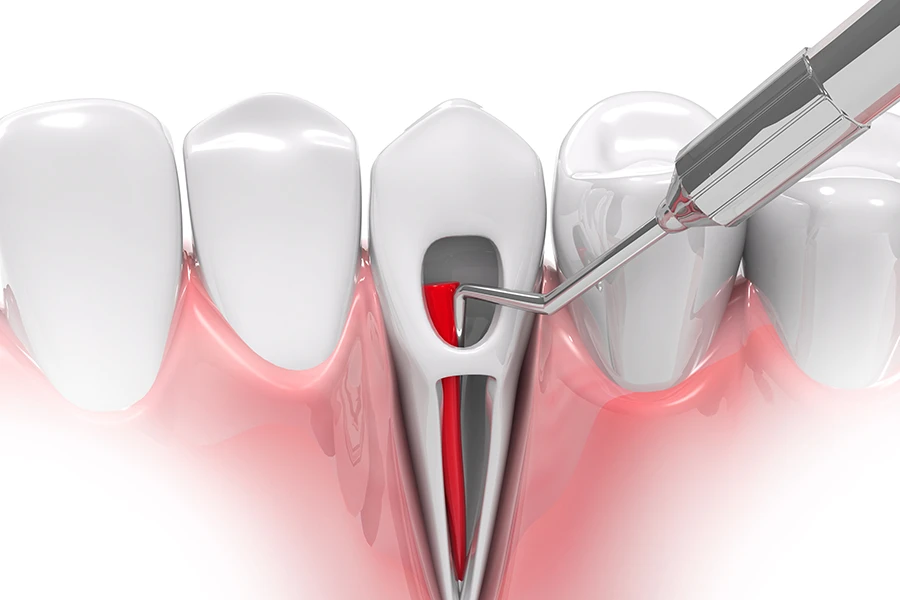
Inside every tooth, beneath the hard outer enamel and the layer of dentine below it, is a soft inner chamber called the pulp. This is where the nerves and blood vessels that helped your tooth develop sit.
When bacteria reach the pulp - usually through deep decay, a crack, or a damaged filling - it can become infected and inflamed. This is what causes the severe toothache that people associate with needing root canal treatment. Left untreated, the infection can spread to the surrounding bone and tissue, and the tooth will eventually need to be removed.
Root canal treatment cleans out the infected pulp, disinfects the inner canals of the tooth, and seals everything to prevent reinfection. The tooth is then restored - usually with a crown - so it looks and functions just like a natural tooth.
.png)
Ready to start your journey?
How does root canal treatment work at Modwena Dental in Stoke-on-Trent?
Do I definitely need root canal treatment?
Not always. The symptoms that suggest you might need root canal treatment - severe toothache, sensitivity to heat that lingers, swelling around the gum, or a tooth that's darkened in colour - can sometimes have other causes.
The only way to know for certain is a proper assessment. If you're experiencing any of these symptoms, book in as soon as you can. The sooner we can take a look, the more options we're likely to have.
If it turns out root canal treatment isn't what's needed, we'll tell you that too - and explain what is.
Is root canal treatment really as bad as people say?
Honestly? No. The reputation root canal treatment has is largely based on how it used to be done - and how it feels when a tooth is already badly infected and causing severe pain.
With modern techniques and effective local anaesthesia, the procedure itself is typically very manageable. Most patients are surprised by how straightforward it feels compared to what they'd built up in their heads.
Henry James, one of our associate dentists, has a particular interest in root canal treatments and carries out this work regularly. You're in experienced hands.
If you're particularly anxious about the procedure, sedation is available at Modwena Dental and can make the whole experience significantly easier.
.png)
.png)
Root canal treatment from
£395
How much does root canal treatment cost in Stoke-on-Trent?
The cost varies depending on which tooth needs treating. Front teeth have fewer root canals than back teeth, which makes the procedure more straightforward and typically less costly. Your dentist will confirm the exact price before any treatment begins.
We offer both NHS and private root canal treatment at Modwena Dental. Your dentist will talk you through what's available to you at your appointment.
What happens after root canal treatment?
It's normal to experience some mild tenderness or sensitivity around the treated tooth for a few days after the procedure - particularly if there was significant infection beforehand. This usually settles on its own and can be managed with over-the-counter pain relief.
Your dentist will talk you through what to expect and advise on next steps for restoring the tooth. In most cases, a crown will be recommended to protect the tooth long-term and restore its natural appearance and function.
Once restored, a tooth that has had root canal treatment can last for many years - sometimes a lifetime - with good care and regular check-ups.
.png)
Frequently asked questions about root canal treatment
Is root canal treatment painful?
The treatment itself, carried out under local anaesthetic, should not be painful. You may feel some pressure during the procedure but not pain. The tooth may be sensitive for a few days afterwards, which is normal and usually settles quickly. If you're very nervous about treatment, sedation is available at our practice.
How many appointments does root canal treatment take?
Most root canal treatments can be completed in one or two appointments depending on the complexity of the case and the level of infection present. Your dentist will give you a clearer idea of what to expect at your initial assessment.
Can I drive home after root canal treatment?
Yes, if you're having the procedure under local anaesthetic only. If you opt for sedation, you'll need someone to drive you home and stay with you for the rest of the day.
What happens if I don't have root canal treatment?
If an infected tooth is left untreated, the infection will spread. This can lead to a dental abscess, damage to the surrounding teeth and bone, and eventually the tooth will need to be extracted. In some cases, dental infections can become serious health concerns if left for long enough - so it's always worth acting quickly.
Will my tooth look normal afterwards?
Yes. Once the tooth has been restored with a crown, it will look and feel just like a natural tooth. Crowns are matched to the shade of your surrounding teeth so the result looks completely natural.
Can a tooth that's had root canal treatment get infected again?
It's uncommon but possible. This is why the tooth is thoroughly disinfected and sealed during treatment, and why a crown is usually recommended to protect it afterwards. Keeping up with regular check-ups and good oral hygiene at home is the best way to protect the tooth long-term.
.png)
Referring your patient to us
We welcome dentist referrals across the Midlands your patients will receive specialist care and excellent results.

Don't wait if your tooth is causing you pain
Tooth pain that doesn't go away on its own is your body telling you something needs attention. The sooner we can assess it, the more we can do to help.