

A smile you love changes more than you'd think
It's easy to dismiss cosmetic dentistry as purely aesthetic. But the truth is, feeling genuinely confident about your smile affects far more than how you look in photos. It changes how you carry yourself in conversations, how freely you laugh, and how you feel about yourself day to day.
Veneers are for people who've spent years being self-conscious about their teeth and are ready to do something about it. And when they're done well - designed carefully, crafted precisely, and placed with real attention to detail - the results can be life-changing.
What are veneers?
Veneers are thin shells - made from either porcelain or composite resin - that are bonded to the front surface of your teeth. They're custom-made to fit your individual teeth and designed to look completely natural, improving the shape, size, colour, and overall appearance of your smile.
They can address a wide range of cosmetic concerns, including:
- Teeth that are permanently discoloured or stained
- Chips, cracks, or minor damage
- Teeth that are uneven, misshapen, or worn down
- Small gaps between teeth
- Teeth that appear too small or short
- Asymmetry in your smile
Veneers don't straighten teeth in the way that orthodontic treatment does - but they can create the appearance of a straighter, more even smile without moving teeth at all. For more significant alignment issues, your dentist may recommend combining veneers with teeth straightening first.
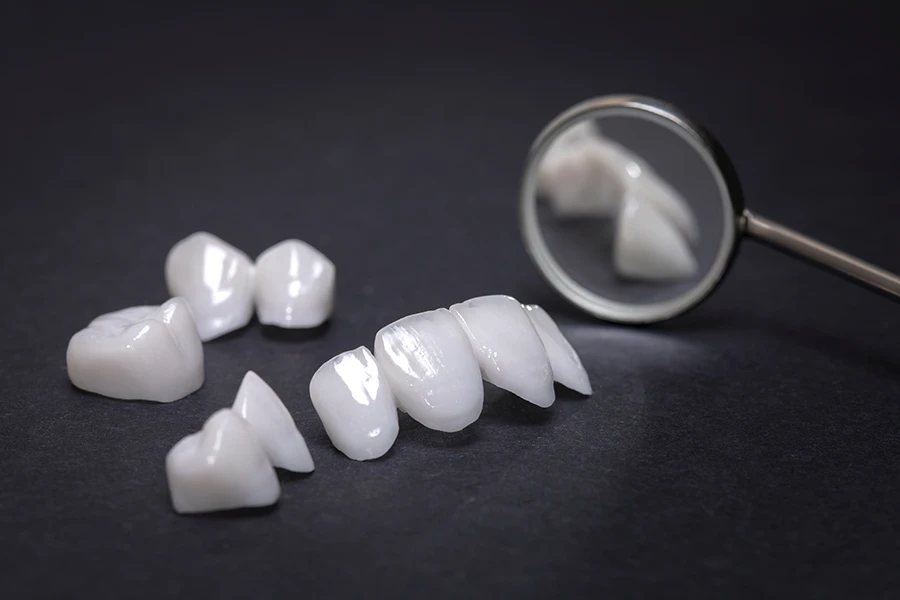
Porcelain veneers vs composite veneers - what's the difference?
Both options can deliver beautiful results, but they work in slightly different ways and suit different situations. Here's how they compare:
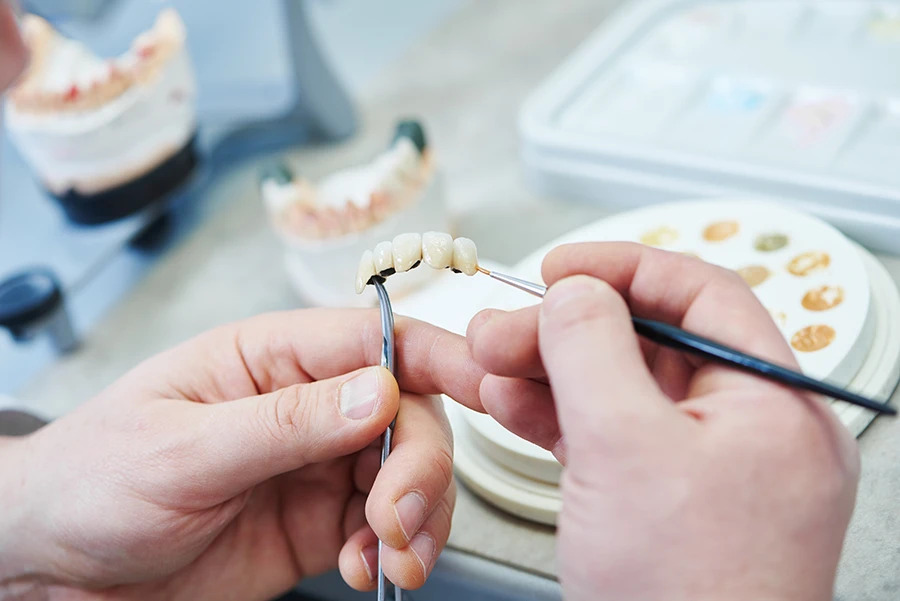
Porcelain veneers are crafted by a dental laboratory from high-quality ceramic material. They're extremely durable, highly resistant to staining, and have a depth and translucency that closely mimics natural tooth enamel. For patients looking for the most lifelike, long-lasting result, porcelain is generally the gold standard.
The process involves a small amount of preparation to the tooth surface - your dentist removes a thin layer of enamel to ensure the veneer sits flush and naturally. This is a permanent change to the tooth, which is an important consideration.
- Lifespan: 10-15 years or more with good care
- Best for: significant colour changes, maximum durability, the most natural appearance
- Process: requires two appointments - one for preparation and impressions, one for fitting
Composite veneers use the same resin material as composite bonding - applied and sculpted directly onto the tooth in a single appointment. Less tooth preparation is needed, making them a more conservative option. They're also more affordable and quicker to place.
The trade-off is longevity - composite veneers typically last five to seven years and can be more susceptible to staining over time. However, they can be repaired and touched up more easily than porcelain if needed.
- Lifespan: 5-7 years with good care
- Best for: a more conservative approach, budget-conscious patients, faster results
- Process: completed in a single appointment
Not sure which is right for you? That's exactly the kind of conversation we have at your consultation. Your dentist will look at your teeth, understand what you're hoping to achieve, and give you an honest recommendation.
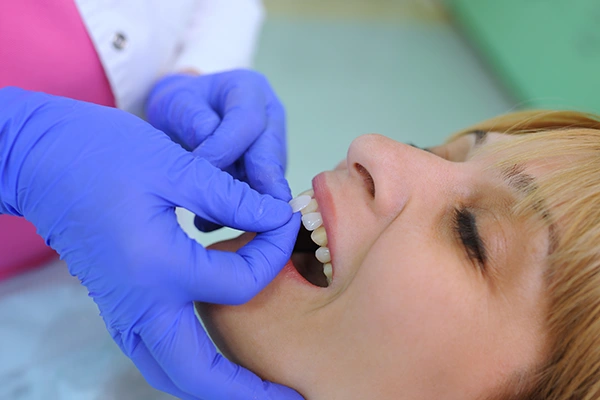
Ready to start your journey?
How do veneers work at Modwena Dental in Stoke-on-Trent?
For composite veneers, steps 2 and 3 happen in a single appointment - the composite is applied and sculpted directly onto the tooth there and then.
Is teeth whitening worth doing before veneers?
If you're having veneers on some teeth but not all of them, yes - and the timing matters. We would always recommend whitening your teeth before veneers to ensure they are the best shade they can be. Veneers are made to a fixed shade and can't be whitened afterwards, so whitening first allows your dentist to match them to your brighter, natural teeth for a seamless result.
We offer teeth whitening at Modwena Dental and can factor this into your treatment plan. Your dentist will advise on the best sequence for your individual situation
.png)
.png)
Composite veneers from
£xx
Porcelain veneers from
£xx
How much do veneers cost in Stoke-on-Trent?
The overall cost depends on how many teeth are being treated and the complexity of the work involved. Your dentist will confirm exact pricing at your consultation before anything is agreed.
Your initial consultation forms part of our new patient appointment at £100, which covers a full assessment and personalised treatment plan.
For larger treatment plans, we offer flexible finance options to help spread the cost - including 0% interest over 18 months. Our treatment coordinator will walk you through everything at your appointment.
Veneers as part of a wider smile transformation
If you're thinking about more than one treatment, we can put together a joined-up plan that takes everything into account - sequenced in the right order to get you the best possible outcome.
.png)
Frequently asked questions about veneers
Do veneers damage your teeth?
Porcelain veneers do require the removal of a small, thin layer of enamel - this is permanent and means the tooth will always need to be covered with a veneer going forward. Composite veneers require little to no preparation, making them a more reversible option. Your dentist will explain exactly what's involved for your specific case at your consultation.
How long do veneers last?
Porcelain veneers typically last 10 to 15 years or more with good care. Composite veneers last around five to seven years. Both benefit from regular check-ups, good oral hygiene, and keeping up with hygiene appointments.
Will veneers look natural?
Yes - when designed and placed well, veneers are virtually indistinguishable from natural teeth. Your dentist will take great care to match the shade, shape, and translucency to the rest of your smile.
Can veneers fix crooked teeth?
Veneers can create the appearance of straighter teeth without moving them. However, for significant misalignment, orthodontic treatment is usually a better long-term solution - and in some cases, combining the two gives the best overall result. Your dentist will give you an honest steer at your consultation.
Can I get veneers on the NHS?
Veneers are a cosmetic treatment and are not available on the NHS in most cases. At Modwena Dental, veneers are offered as a private treatment.
How do I look after veneers?
Brush twice daily, floss regularly, and keep up with your hygiene appointments. Avoid biting directly into very hard foods with veneered teeth, and if you grind your teeth at night, let your dentist know - a nightguard can help protect your veneers. Other than that, they don't require any special maintenance.
.png)
Ready to transform your smile in Stoke-on-Trent?
If you've been thinking about veneers for a while, the best next step is a conversation. Book your consultation and let's talk about what's possible.