
Crowns and bridges in Stoke-on-Trent
Whether you need to restore a damaged tooth or replace one that's missing, crowns and bridges are two of the most reliable and natural-looking solutions in dentistry. Built to last, designed to blend in, and tailored to your individual teeth.
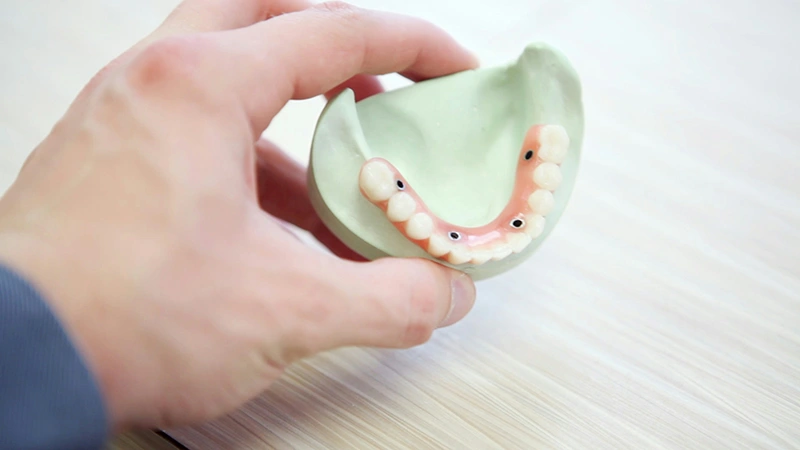

Restoring your teeth shouldn't mean compromising on how they look
Dental restorations have come a long way. The days of obviously false-looking caps or visible metal edges are behind us. Today's crowns and bridges are crafted to closely mimic the appearance of natural teeth - matched to your existing shade, shaped to fit your bite, and designed to be virtually indistinguishable from the real thing.
But it's not just about aesthetics. A well-placed crown or bridge restores full function to your mouth - so you can eat, speak, and smile with confidence again.
What is a dental crown?
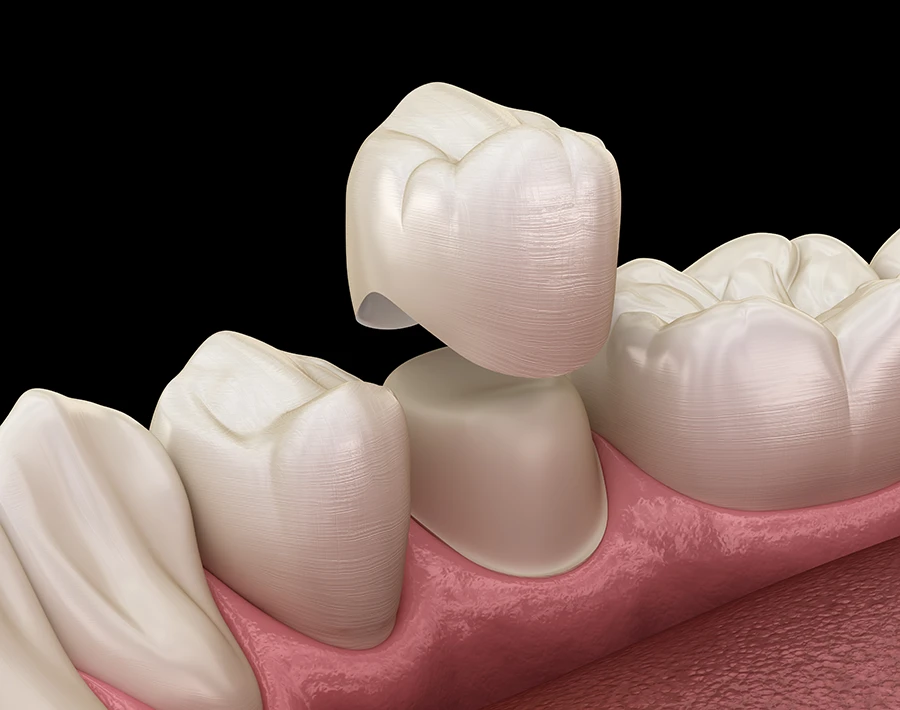
A crown is a custom-made cover that fits over an existing tooth, restoring its shape, size, strength, and appearance. It completely encases the visible part of the tooth above the gumline - think of it as a protective cap that gives a damaged or weakened tooth a new lease of life.
Crowns are used in a number of situations:
- To protect a tooth that has been significantly weakened by decay or damage
- To restore a tooth that is too broken down to be repaired with a filling alone
- To cover and protect a tooth following root canal treatment
- To improve the appearance of a tooth that is severely discoloured or misshapen
- To anchor a dental bridge in place
- To restore a dental implant
Crowns are made to measure - crafted to match the colour and shape of your surrounding teeth so the result looks completely natural.
Ready to start your journey?
What happens when you get a crown at Modwena Dental in Stoke-on-Trent?
What is a dental bridge?
A bridge is used to replace one or more missing teeth. It works by using the teeth on either side of the gap - known as abutment teeth - as anchors, with an artificial tooth (or teeth) suspended between them to fill the space.
The result is a fixed, natural-looking restoration that restores both the appearance and the function of your smile. Unlike dentures, a bridge is permanently fixed in place - there's nothing to remove or soak overnight.
Replacing a missing tooth isn't just about appearance. When a tooth is lost, the surrounding teeth can start to drift into the gap over time, affecting your bite and potentially causing further dental problems. A bridge helps prevent this from happening.

Is a bridge or a dental implant the right choice for me?
Both bridges and dental implants are excellent solutions for replacing missing teeth - but they work in different ways and suit different situations.
A bridge is typically quicker to place, involves no surgery, and is often more affordable. However, it does require the preparation of the healthy teeth on either side of the gap, which is worth considering.
A dental implant replaces the tooth root as well as the visible tooth, making it the closest thing to a natural tooth available in dentistry. Implants don't affect neighbouring teeth and can last a lifetime with good care - but they involve a surgical procedure and a longer treatment timeline.
Your dentist will talk through both options at your appointment and help you make an informed decision based on your clinical needs, lifestyle, and budget.
.png)

Ready to start your journey?
What happens when you get a bridge at Modwena Dental in Stoke-on-Trent?

Dental crown - from
£445
Dental bridge - from
£495
How much do crowns and bridges cost in Stoke-on-Trent?
Dental crown - from £445 Dental bridge - from £495
The exact cost depends on the material used, the complexity of the work involved, and how many teeth are being treated. Your dentist will confirm all costs before any treatment begins - no surprises.
We offer both NHS and private crowns and bridges at Modwena Dental. Your dentist will talk through what's available to you at your appointment.
For larger treatment plans, flexible finance options are available including 0% interest over 18 months. Our treatment coordinator can walk you through the options.
Caring for your crown or bridge
Crowns and bridges are designed to be durable and long-lasting - but they do benefit from good care.
Here's how to keep them in the best condition:
- Brush twice daily as normal - crowns and bridges don't require any special brushing technique
- Floss carefully around the edges of crowns and under the false tooth of a bridge - interdental brushes can be particularly helpful here
- Keep up with regular check-ups so your dentist can monitor the condition of your restoration
- Attend regular hygiene appointments to keep the surrounding gum tissue healthy
- Avoid biting directly into very hard foods where possible
With good care, a well-placed crown or bridge can last ten years or more.
Seeing patients from across Staffordshire for crowns and bridges
We treat patients needing crowns and bridges from right across the region - from Stoke-on-Trent and Hanley to Newcastle-under-Lyme, Shelton, Hartshill, Penkhull, and Trent Vale, as well as from wider Staffordshire, Derbyshire, and Leicestershire.
If you've been putting off restoring a damaged or missing tooth, now is a good time to get it looked at. The sooner a problem is addressed, the more straightforward it is to treat.
Frequently asked questions about crowns and bridges
How long do crowns and bridges last?
With good care and regular check-ups, crowns and bridges typically last between ten and fifteen years - sometimes longer. The longevity depends on the material used, the location in the mouth, and how well the surrounding teeth and gums are maintained.
Does getting a crown or bridge hurt?
The procedure is carried out under local anaesthetic, so you shouldn't feel any pain during treatment. Your tooth and the surrounding area may feel a little sensitive for a few days afterwards, which is normal and usually settles on its own. If you're anxious about treatment, sedation is available at Modwena Dental.
Can a crown fall off?
It's uncommon but it can happen, usually if the tooth underneath has developed decay or if the cement has weakened over time. If your crown feels loose or comes off, contact us as soon as possible - in many cases it can simply be re-cemented.
Will my crown or bridge look natural?
Yes. Crowns and bridges are custom-made and shade-matched to your existing teeth. In most cases they're virtually indistinguishable from natural teeth - patients often tell us they forget which tooth has been restored.
Is a bridge permanent?
A dental bridge is fixed and cannot be removed at home. It's cemented permanently in place and functions just like your natural teeth. Unlike dentures, there's nothing to take out, soak, or manage - it simply becomes part of your smile.
Can I get a crown or bridge on the NHS?
NHS crowns and bridges are available in certain clinical circumstances. At Modwena Dental we offer both NHS and private options, and your dentist will explain what's available to you at your appointment.

Referring your patient to us
We welcome dentist referrals across the Midlands your patients will receive specialist care and excellent results.

Book your crown or bridge appointment in Stoke-on-Trent
If you have a damaged tooth that needs protecting or a gap that needs filling, the first step is a proper assessment. We'll take a thorough look and talk you through the best options for your situation. It starts with a simple conversation.